Private Label: Co-Creation and Partnerships to Expand Across Europe
Full text
Private label has evolved significantly over the past decade. Although it was initially closely associated with low prices in Spain, it has now established itself as a winning proposition that competes on quality, innovation and specialisation, appeals to millions of consumers every day through its value offering, and already leads in certain categories. Much of this progress is thanks to Spain’s food industry, which has demonstrated excellence and competitiveness and largely succeeded in adapting to this trend.
Developing a private-label product requires close collaboration between the retailer and the manufacturer. This co-creation delivers at least three competitive advantages: the ability to adapt quickly and flexibly to consumer tastes and needs; a continuous drive for improvement, fuelled by the ongoing challenge between the co-creators; and, of course, a strong relationship that fosters long-term shared commitments and ambitions. This synergy also creates major opportunities. One is particularly relevant in a mature market characterised by tight margins, constant geopolitical change and recurring investment needs, where returns depend more on economies of scale than on added value: the opportunity to internationalise quickly and easily with retailers that are present in what I believe we should now call our domestic market—Europe.
Expanding internationally across Europe remains an ambitious but necessary goal. For a private-label manufacturer, it is a complex challenge requiring large-scale production, in-depth market research, strong logistics capabilities, compliance with different regulations and a demanding commercial rollout. However, access to the network of a multinational supermarket chain can greatly simplify the process.
Lidl’s operating model illustrates this dynamic. In Spain, we work with around 860 suppliers and purchase approximately €7.9bn worth of goods from them, meaning products of Spanish origin account for around 70% of our range. Our international infrastructure—around 12,900 stores across some 30 countries—also helps these manufacturers achieve scale beyond Spain’s borders.
However, international expansion involves much more than shipping a product from one country to another. Europe is not a single market when it comes to consumption: tastes and habits vary considerably. The key is therefore to combine scale with flexibility, using efficient industrial capabilities that can still adapt to each country’s realities. This is a co-creation process that our partnerships have already taught us well: retailers contribute customer insights, category knowledge and commercial access, while manufacturers bring specialisation, agility, technology and product expertise.
Moreover, price and production capacity are no longer enough to secure growth. Quality, safety, traceability and sustainability have become essential requirements. We therefore believe we must support our partners in addressing key challenges such as efficient resource management, emissions reduction, improved nutritional quality and animal welfare.
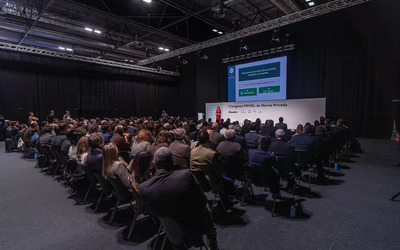
Professional meeting points such as PRIVEL and the launch of a magazine like Alimarket Marca Privada reflect this step-change and the maturity of the channel. By acting as a key link between domestic and international manufacturers and retailers, they foster connections and open up new business opportunities.
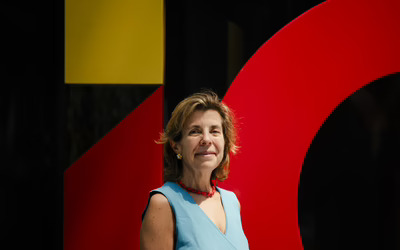
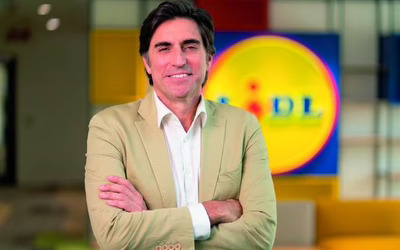
(*) Carlos González-Vilardell is the General Manager of Sales and Purchasing at Lidl Spain (Lidl Supermarkets), a retailer with more than 30 years of experience in the country and currently the third-largest operator in the sector by market share. Today, Lidl Spain has a network of more than 730 stores, 14 logistics centers, and a workforce of more than 20,000 people. It sources from approximately 860 domestic suppliers, from whom it purchases more than 7,900 M€ worth of products annually, exporting more than half of that amount. Lidl Supermarkets is the Spanish subsidiary of the German company Lidl Stiftung, which is part of the Schwarz Group, the world’s fourth-largest operator in the food retail sector.