Working together for the benefit of consumers
Full text

Over the past 25 years, Spain’s grocery retail sector has established itself as one of the most economically and socially efficient in our region. The innovative processes that have brought it to this position are varied and are underpinned by the development of a modern business structure with characteristics specific to Spain. The growth in company size, the development of cooperative arrangements such as buying groups, increasingly efficient store designs and product ranges, and greater professionalisation have created the economic conditions for sustained and sustainable growth. This has also been driven by increased investment in innovation and the integration of technology into management processes. It is important to emphasise that these characteristics have spread throughout a diverse network in which international, national and regional companies, franchises and cooperatives coexist—and compete. This variety of businesses and formats is a defining feature of Spain’s grocery retail sector and a major driver of competitiveness in the service of consumers.
Consumers are at the heart of this brief description of our retail model. In fact, one of the major paradigm shifts in the evolution of grocery retail in Spain has been the development of an in-depth, specialised understanding of consumers and the products being sold. Traditionally, the shopkeeper has been—and remains—the person in direct contact with customers. They listen to customers’ wishes, needs and complaints; know the hours and days when people shop most; and spot changes in consumption patterns when the weather turns cold or hot, or when Christmas or the summer holidays arrive.
Technological advances introduced over the past quarter-century have made it possible to develop this understanding to an exceptionally high level of precision and breadth, enabling retailers to understand consumer expectations. Equally importantly, modern information systems allow this knowledge to be shared across the entire agri-food chain. The best models are always collaborative, which means producers, industry and retailers can now work together for the benefit of consumers.
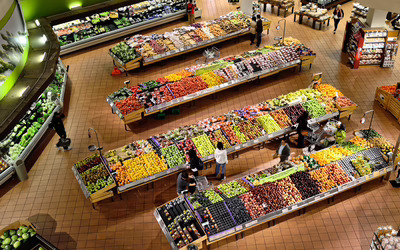
Far from standardising and impoverishing the food offering, this knowledge enables retail companies to tailor their product ranges to the specific characteristics of their customers. Competition comes into play here: through differentiation, retailers can offer a broad range of options that allows consumers to choose. The fact that customers can simply cross the street and choose between two or three supermarkets for their shopping is tangible evidence of how our retail model works. It also presents a major challenge: selecting, from approximately 800,000 products available, the maximum of 20,000 that can fit on store shelves—and that consumers are actually looking for.
Naturally, every supermarket company aims to be the one customers choose to fill their entire shopping trolley, and each works hard every day to offer the best possible range and quality at competitive prices. The reality is that the choice is so broad and accessible that, beyond their favourite supermarket brand, consumers can find something different to inspire them, a preferred product or a special service at one retailer or another. The conclusion, therefore, is that consumers seek variety, convenience, quality and competitive prices. Retailers have a major responsibility to listen and respond to customers’ needs and, in addition, to convey these constantly changing realities to the rest of the supply chain.
(*) ASEDAS is the Spanish Association of Distributors, Self-Service Stores and Supermarkets. It represents 75.4% of Spain’s grocery retail sector. Its members employ more than 344,000 people and operate 19,400 retail distribution outlets and 619 wholesale distribution outlets, with more than 11 million square metres of retail space dedicated to food and FMCG products.