Part of Mexico
Cultural adaptability in business: One of the most desirable attributes in a 21st-century executive
Full text
1967 marked a watershed moment in the way business was conducted worldwide. Prior to that time, the overwhelming majority of international business involved trading with a neighbouring country; on more adventurous occasions, with another country in the region. Furthermore, the rules of business were clear: international trade operated under the ‘law of the jungle’, where the bigger animal eats the smaller one.
To picture the international business landscape of that era, one must understand the negotiating style of executives back then: a tough style, the so-called ‘Competitor’ profile when it came to negotiations. Negotiations were based on power and the ability to gain an advantage that would allow you to overpower your opponent – and yes, I did say ‘opponent’; the person on the other side of the negotiating table was your enemy.
But the countries sat down at the table, convened by the US, and the world established rules. Beginning at Bretton Woods in 1944 and continuing with the Geneva Round of 1947, the world reached an agreement and gradually developed an international trading system that allowed countries and companies to compete freely, bringing ever-greater fairness and a level playing field to the key players in the international trading system. The world moved from local and regional trade to, little by little, international trade.
Let us understand, then, that doing business in your own country, your own environment or even your regional environment is not the same as doing business with a culture on the other side of the world; the conditions are very different and the attributes, knowledge, tools and skills you need are far more complex. And so, the executives of these companies, which were beginning to become multinationals, discovered the complications of operating in a very different world.
At the start, I mentioned the year 1967 as a watershed; perhaps I should have said ‘between 1967 and 1973’. Around that time, the computer hardware giant, IBM, had attempted to become a truly multinational company, only to uncover countless shortcomings among its executives—predominantly American—who were leading operations across various regions and countries. Why did they fail? Because they were unable to function effectively as executives within other cultures.
Those were the years when Professor Geert Hofstede developed, whilst at IBM, the study that would later become the most important tool for cultural adaptation in the history of international business – a tool still used today by the vast majority of international executives in multinational companies: Hofstede’s Cultural Dimensions.
Now, let’s leave the world of 1973 behind and fast-forward to the present day. Looking back and comparing the flow of goods, the volume of freight, the number of ships, the frequency and capacity of air freight, and so on, on a typical day, 1973 bears no comparison to 2026. And with this, interactions today between executives from very different and distant countries are more than just a constant; they are the way the business world operates. However, the complications and complexities of these interactions have not disappeared; they have multiplied.
Let us now look at the way negotiations are conducted, the manner in which corporate executives around the world plan and carry out international negotiations. The rule tells us that, in an environment of little competition and product scarcity, negotiations tend to be tough, complex and power-based. Under a free-market system, competition is much greater. The increase in international trade has meant that negotiations today no longer follow the model of competition but have shifted to a model of cooperation.
Indeed, nowadays and generally speaking, you cannot negotiate aggressively; you cannot base your negotiation on power, pressure and confrontation. These days, the overwhelming majority of negotiations must be conducted on the premise of cooperation, and this requires negotiators to develop a range of very specific negotiation skills, but one in particular makes all the difference: the capacity for cultural adaptation.
Yes, that famous study by Hofstede at IBM between 1967 and 1973 – the one that at the time seemed like a waste of time – has become more than just an advantage; it has become a necessity for executives in multinational businesses, especially for negotiators. I would go so far as to say that, however skilled a negotiator you may be in your own environment, a lack of understanding of these cultural adaptation techniques will lead to failure in international negotiations; what makes you highly effective in your own environment does not necessarily work in a different context, where people think, plan, react and operate on very different terms.
But let’s be clear about what this is all about: it is not merely a matter of understanding how people greet one another, what the protocols for introductions are, what topics are appropriate, what the customs are, and so on, in the other culture; what is truly important is understanding how the mind of the executive sitting opposite me – with whom I am about to negotiate an international contract – works.
Throughout my life, I have come across executives who have underestimated the importance of this issue, who have even fallen into the trap of arrogance, believing that they are excellent executives and do not need these tools to function in the world of international business. Believe me, I have seen them pay the price for failing to develop the skills, tools and capabilities required for intercultural negotiation.
There are those who predict that cultural diversity in business will gradually fade away and that, over time, this increase in global interactions will eventually erase major cultural differences. I must admit that this is possible, but the evidence suggests otherwise, as Thomas Friedman discovered after writing his book *The World Is Flat*. As we were saying, the evidence suggests otherwise.
The good news is that these tools do exist and that there is a growing commitment amongst executives, companies and business schools worldwide to disseminate and utilise them.
Yes, the world is very different today; being able to perform effectively in different business contexts across a wide range of regions has become an indispensable skill for the global executive.
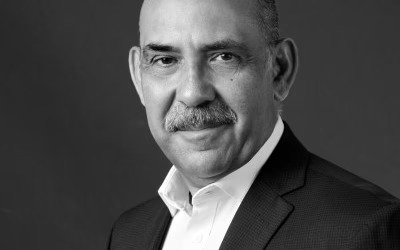
(*) Carlos Ernesto Teissier, from Monterrey (Mexico), has devoted most of his professional life to international relations, leadership, change management and intercultural negotiation processes. A professor, writer, speaker, lecturer and consultant, his many qualifications include a Master’s degree in Global Management from the University of Phoenix, a PhD in International Business specialising in Intercultural Negotiations from Robert Kennedy College in Switzerland, and a specialisation in Management and Leadership in Education from Harvard University. He currently also serves as a visiting professor at various international universities, notably the Rouen School of Business in France and the Instituto de Estudios Bursátiles in Madrid (IEB).