An Invitation to European Industry
Full text
Latin American retail is undergoing a transformation that is accelerating year after year. Private label is growing at double-digit rates, while the expansion of hard-discount formats is changing the way consumers shop and perceive value.
Colombia has been the region’s leading example, showing how discount retail can transform a market and accelerate the development of a specialised industrial ecosystem. Other Latin American countries are following the same path, and Peru now represents a particularly attractive opportunity.
The pace of expansion gives a clear indication of the scale of the challenge. Mass, Supermercados Peruanos’ hard-discount format, has opened more than 1,000 stores over the past four years. Growth at this rate generates demand for products, innovation and industrial capacity faster than local production can develop to meet it.
That is where the opportunity lies. Private label needs an industrial base: specialised, efficient and technologically advanced manufacturers; innovation and product-development capabilities; packaging solutions; high-quality standards; and, above all, long-term relationships between retailers and producers.
Peru has excellent industrial companies, but a gap remains between the pace of retail expansion and the capacity available to support its growth. Closing that gap creates opportunities for collaborative agreements, partnerships with local producers, technology transfer, joint ventures and new investment in production capacity.
The country also offers attractive conditions for long-term investment: three decades of largely uninterrupted economic growth, one of Latin America’s most stable currencies, low inflation, competitive energy costs and an available workforce.
This is complemented by consumers for whom the combination of quality and price is particularly compelling. In an economy where informal employment exceeds 70%, millions of families manage variable incomes and need to make every sol go as far as possible. Saving on food, cleaning products and personal care can free up money for education, healthcare, transport and housing.
This value proposition is not limited to lower-income households. More affluent consumers are also becoming more rational in their purchasing: paying for what genuinely adds value and saving on everyday products so they can allocate money to other priorities.
The invitation to European industry is clear: look at Peru as more than an export destination. The market is growing, and retailers need industrial partners capable of supporting that expansion. Europe has decades of experience in own-brand products, specialised manufacturers, technology and know-how. Peru has a rapidly expanding market and an industry that needs to increase its capacity and specialisation.
The opportunity is open to those who want to take part in the next stage of Peruvian retail development, contribute expertise, build industrial partnerships and manufacture locally while growing alongside a market that is already accelerating.
The time to enter is not when demand has fully matured, but now, while the partners who will shape this new phase of private label in Peru are still being selected.
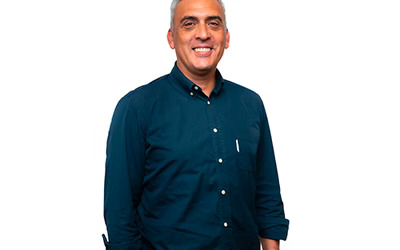
(*) Francisco de la Roza is Managing Director at Supermercados Peruanos, the country’s largest supermarket chain with over 1,750 stores across four formats: ‘PlazaVea’, ‘Vivanda’, ‘Mass’ and ‘Makro’. The company is part of the Intercorp group, a key economic driver in Peru,
with annual sales of over 15,000 M$.